
Football and the digital economy are two concepts which at first glance do not appear to sit hand in hand. Football, and more specifically football refereeing, depends on the presence of soft skills such as communication, judgement, team-work and decision making (Doyle, 2020). You would therefore be forgiven if you were under the impression that refereeing has been relatively untouched by the digital economy.
Traditionally, programming AI to think beyond simple and routinised decision making and subsequently implementing this at a real time level has been difficult. However, technology has changed the job role of a football referee in many ways, with the implementation of goal-line technology in 2012, the introduction of communication systems amongst referees in 2006 and the introduction of Video Assistant Referee’s (VAR) in 2018 being three of the most recent examples. The implementation of this technology, particularly the latter, has been met with resistance. Thus, it is interesting to consider: in what ways has technology changed the job of those holding the whistle (both on and off the pitch)? And how much further can technology go in replacing human judgement in the game loved by so many?
Technology has improved the job role for referees in a number of ways. The new communication systems have (obviously) improved the ability of the match officials to work and communicate as a team. Goal line technology and VAR have similarly improved the accuracy of decisions and so have worked to reduce human error – arguably benefitting referees, players and fans alike.
On the surface, this acts as good evidence for the way that technology and AI are increasingly encroaching more aspects of our lives. Contrary to popular assumptions, AI is not just good at routinised behaviour such as acting as part of an assembly line. Now, it assists judgment and the decisions made in many industries, including sport. This is supported by Brynjolfsson and McAfee (2014) in their book: ‘The Second Machine Age: Work, Progress and Prosperity in a Time of Brilliant Technologies’ who suggest that despite common belief, developments in technology have improved the ability of Artificial Intelligence (AI) to compute high level reasoning with very little computation. AI may therefore progressively play a role in supporting occupations where decision making based on learned rules is key to the job role – such as refereeing.
By improving the accuracy of decisions, technology has taken some pressure off of referees in what is an extremely high-pressure environment. After THAT game against Germany in the world cup of 2010 the referee and his two linesmen were under police protection as they left the match following the controversially disallowed goal which was (clearly) over the line. The heartbreaking moment can be seen above.
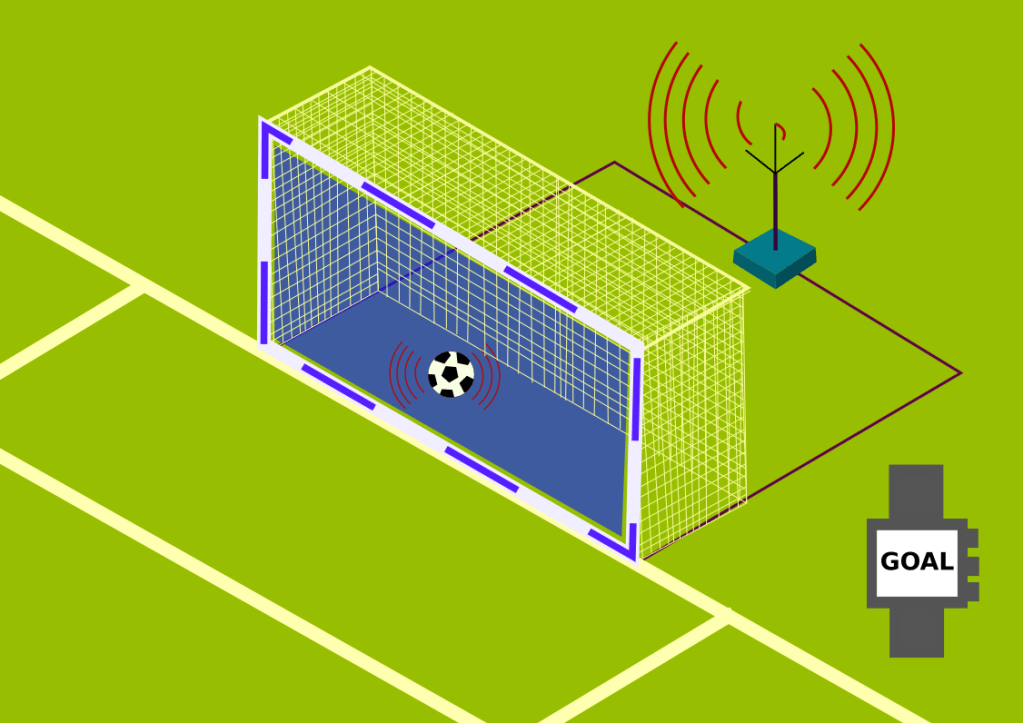
With the introduction of Goal-line-technology, this level of human-error has been eradicated from the game. Decisions which were once subjective and based purely on human judgement have become objective through the introduction of technology. This proves so important for referee’s, where the pressure is so great that ‘big errors often produce an emotional fallout that hurts a lot’ (Sutcliffe, 2019). Technology has therefore acted as a lifeline for referees where the high levels of scrutiny experienced after a wrong decision can have huge impacts mentally. One only needs to complete a brief search on Twitter and the evidence for why is outstanding:

https://www.mirror.co.uk/sport/football/news/bobby-madley-reveals-sickening-abuse-14212614
The rise in social media and digital technologies brings new meaning to the phrase ‘everyone’s a critic’. Referees are experiencing higher levels of scrutiny (and abuse) than ever before as a result of social media and this is something that is certainly having an impact on the profession. Ex premier league referee Madley has frequently spoken out against the abuse received by refs on social media.

https://www.mirror.co.uk/sport/football/news/bobby-madley-reveals-sickening-abuse-14212614
The digital world empowers fans and places referees under higher levels of scrutiny than ever before. Ironically, the implementation of more digital technology could be the answer to protecting referees – where abuse is now aimed at technologies such as VAR rather than falling on the referees shoulders.
Undoubtedly, technology and the digital economy will continue to have great impacts on refereeing as a job role. Much like it is impossible to predict what cars will look like in 30 year’s time, or accurately forecast the mobile phones of tomorrow, it is difficult to make assumptions on how specifically technology will further change the game. However, there is an argument that technology such as VAR should be taken back out of the game to reshape the referees job for the better.
This brings forward the question: Can technology ever replace human judgement? If, after examining the implementation of VAR, the answer is no, then perhaps refereeing needs to be taken back to basics: a reinvention of the job where the digital economy has far less impact. I would argue that the humanistic refereeing errors are a suitable price for fans to pay to maintain the thrill of the game.
Perhaps then, the digital economy has changed the game too far – bringing with it inhuman levels of objective judgement for decisions which are subjective in their nature. In the future, refereeing may be further changed by the digital economy, with AI offering an abundance of solutions. However, can technology ever replace human judgement… and has technology in football gone VAR enough?
References:
Byrnjolfsson, E. and McAfee, A. (2014): ‘The Second Machine Age: Work, Progress and Prosperity in a Time of Brilliant Technologies’
Sutcliff, S (2019): ‘Mistakes, abuse & VAR: What are the pressures on a premier league ref?’ Accessed on 12th Feb 2020 from: https://www.bbc.co.uk/sport/football/47690634
Department for Business, Energy and Industrial Strategy (2019): ‘Business Basics: Attitudes to Adoption’ (PDF) Accessed on 11th Feb from https://assets.publishing.service.gov.uk/government/uploads/system/uploads/attachment_data/file/838473/attitudes-to-adoption.pdf
 Matt Jackson's BEMM129 blog
Hi matte!
This is a very interesting article. Honestly, I am a sports fan. As you said, the development of digital technology really affects the work of football referees. I think the application of digital technology in sports games is very useful for referees. Because digital technology can assist referees well, they can help referees make more accurate judgments and reduce errors. Referees and athletes are a very important part of a sports game. No matter who they miss, it will affect the excitement of sports games. Therefore, I don’t think technology can completely replace the work of referees.
LikeLike
Brilliant post Matt!
I really enjoyed reading this. Gave me an insight into occasions which were pivotal for the implementation of VAR. There have been some inconsistency with VAR over the last few weeks. Nonetheless, I believe it is a great edition to the game, especially after that England 2010 heartbreak which we all felt! Also, this post came at a perfect time and I definitely feel more educated on the topic.
Do you feel like there is still a long way to go before it becomes a fully accepted part of the game? Also, do you believe that in the foreseeable future there will be no referees on the pitch as everything will be done via technology? Some may believe that this takes the weight off referees. Especially in the case like Bobby Madley, who clearly made some unwarranted comments. Furthermore, if everything was done by robots or computers then the job gets done and there is no personal life involved.
Finally, I read an article on Talk-sport recently which discussed the next step being monitors on the pitch-side (https://talksport.com/football/629033/premier-league-referees-pitch-side-monitors-var/). Do you feel this may cause even more pressure for referees, therefore, leading to bad decision making in the moment?
LikeLike
dear Matt: I did not realize that digital economy can be used in sports before I read ur work. AI help with judgement and decision making is really amazing. Imagine that we can get help from AI when we are making an investment. It can not only help us avoid trash stocks but also help us find stocks with great potential. in that way, the market will become fully efficient. However, this is not because of the information become totally efficient but with the help of AI. And there will be no chance to make profit in theory. The gap between rich and poor will be widen cause the poor can not afford AI service, further they can not get the chance to make profit. thinking in this way, I feel a little bit afraid, it seems hard to make live in the future. What do u think?
LikeLike